
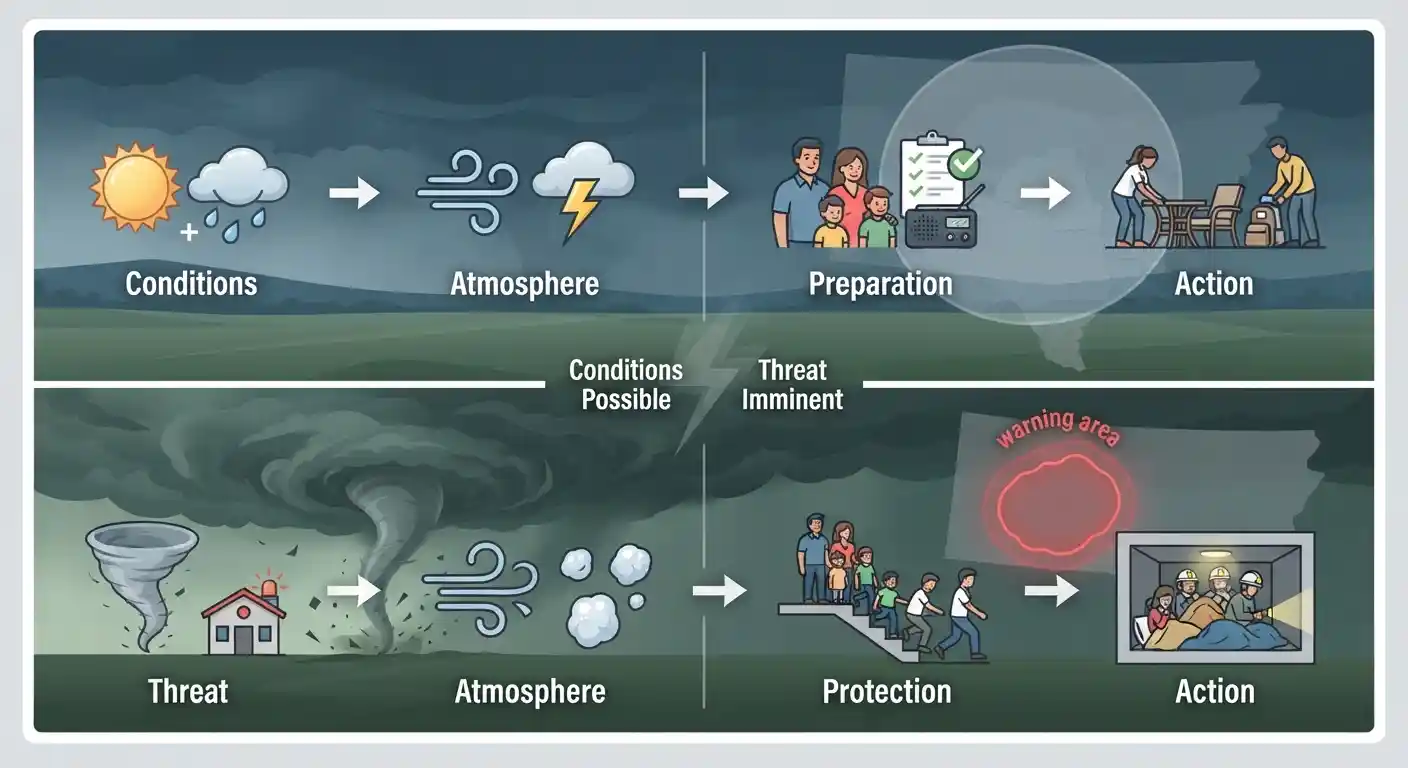
Tornado alerts are some of the most important weather messages you can get, and people often mix them up. A watch and a warning are very different, and each calls for a different response. This guide explains both, what to do when each is issued, and how to follow storms live on our tornado tracker.
Tornado Watch: Be Prepared
A tornado watch means conditions are right for tornadoes to form. The ingredients are in place, such as warm, moist air, strong wind shear and unstable storms, but no tornado has necessarily been spotted.
Watches cover a large area, often many counties or even several states, and usually last for several hours. They are issued by the Storm Prediction Center in the United States.
Think of it this way: a watch is like having all the ingredients for a cake on the counter. A tornado could happen, so you need to stay alert.
Tornado Warning: Take Action Now
A tornado warning means a tornado is happening or is about to happen. It is based on a tornado seen by a trained spotter or on a strong rotation signature on radar.
Warnings cover a much smaller area, often a polygon drawn around the storm’s path, and usually last 30 to 60 minutes. They are issued by your local National Weather Service office.
Think of it this way: the cake is in the oven. The danger is real and close, and you must act immediately.
Quick Comparison
| Tornado Watch | Tornado Warning | |
|---|---|---|
| Meaning | Tornado possible | Tornado happening or imminent |
| Area | Large (many counties) | Small (storm path) |
| Duration | Several hours | Usually under an hour |
| Your action | Get ready | Take shelter now |
What Is a Tornado Emergency?
A tornado emergency is rarer and more serious. It is issued when a confirmed, violent tornado is expected to hit a populated area, with a high risk of deaths and catastrophic damage. If you see one for your area, take shelter immediately.
What to Do During a Tornado Watch
- Check your sources. Keep a phone, radio or the live map ready for updates.
- Know your shelter. Decide where you would go if a warning is issued.
- Charge your devices and keep shoes, a flashlight and any medicines close.
- Review your plan with your family, and think about pets and neighbors who may need help.
- Watch the sky and change plans for outdoor events.
What to Do During a Tornado Warning
- Go to shelter immediately. Do not wait to see the tornado.
- Move to the lowest floor. A basement or storm shelter is best.
- No basement? Go to a small interior room, such as a bathroom or closet, away from windows.
- Stay away from windows and outer walls.
- Protect your head and neck with your arms, a helmet or heavy blankets.
- Stay put until the warning expires or officials say it is safe.
Where Not to Shelter
- Mobile homes: even a strong one is not safe in a tornado. Move to a sturdy building or a community shelter before the storm arrives.
- Cars: a vehicle can be thrown or crushed. If you are caught in one, leave it for a sturdy building if you can reach one safely.
- Highway overpasses: these are not safe. They can funnel wind and debris.
- Large open rooms: gyms, malls and big stores have wide roofs that can collapse. Move to a small interior space.
How You Will Receive Alerts
Warnings can be very short. In the United States, the average lead time is often only about 10 minutes, so use more than one way to get alerts:
- Phone alerts: Wireless Emergency Alerts are sent automatically to phones in the warned area.
- NOAA Weather Radio: this can wake you at night, even if your phone is silent.
- Local TV, radio and apps.
- Outdoor sirens: these are meant for people outside, so do not rely on hearing them indoors.
Tornado Alerts Outside the United States
The terms “watch” and “warning” are used by the U.S. National Weather Service. Other countries use their own systems and wording. If you live elsewhere, check how your national weather service describes the same risk.
Following Tornadoes on a Live Map
Our tornado tracker shows active tornado alerts on a live map, so you can see where watches and warnings are in force. To follow the storm itself, use our live radar and the lightning map.
A watch means tornadoes are possible, so get ready. A warning means a tornado is happening or about to happen, so take shelter now. Do not wait to see or hear a tornado before you act.