
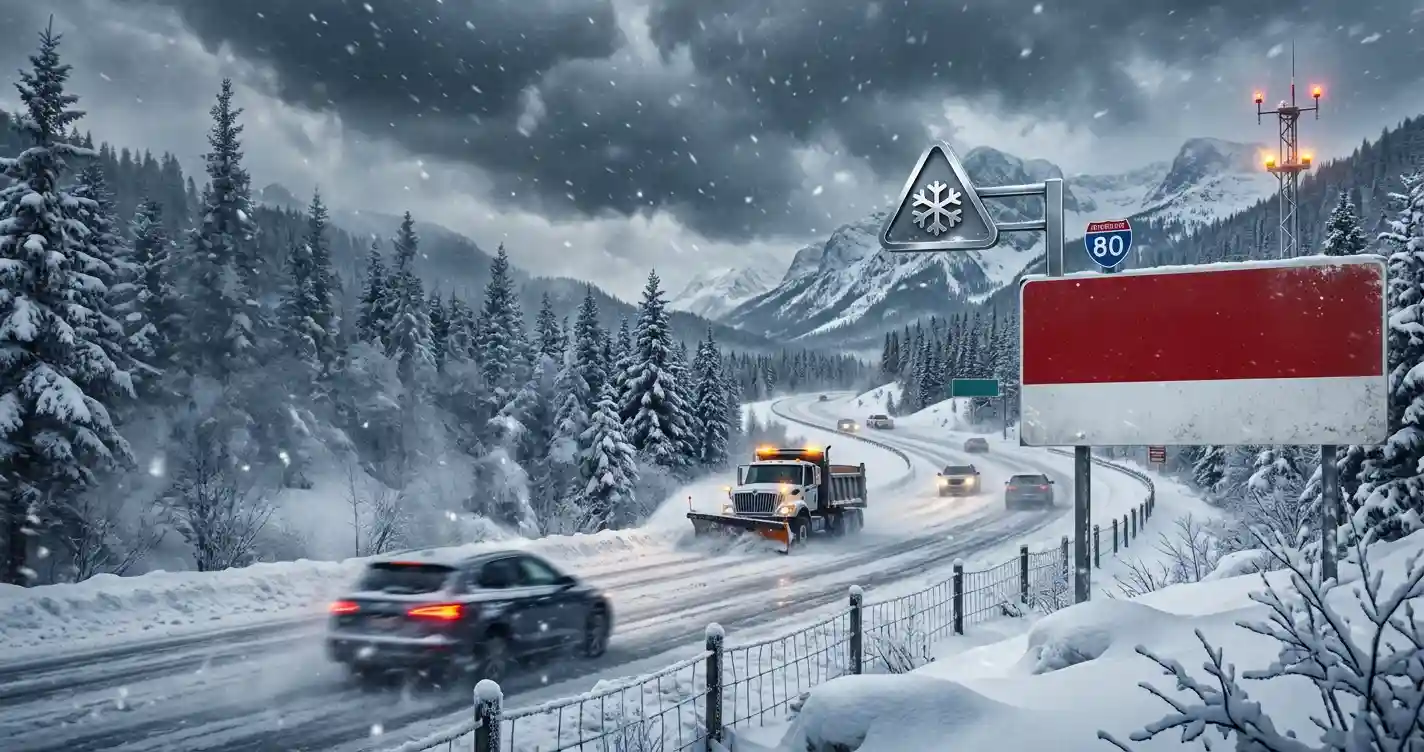
Live winter storm warnings, blizzard warnings and winter weather advisories, with radar and snow cover.
Alerts: U.S. National Weather Service. Radar: NOAA. Snow cover: NASA MODIS satellite, worldwide, daily, with gaps under clouds. Alerts cover the United States. This page does not replace official warnings. Check road conditions before you travel.
What This Winter Storm Map Shows
This page shows active winter weather alerts on a live map. The alerts come from the U.S. National Weather Service and refresh every 5 minutes. Each colored area is under a warning, watch or advisory for snow, ice or extreme cold. The list next to the map groups the alerts by type and shows how many areas are affected. You can filter by alert type, turn on the radar to see where snow is falling, or add a satellite layer that shows where snow covers the ground.
Is There a Winter Storm Warning Near Me?
Press My location and allow location access. The map moves to your position, and a box above the map lists every active winter alert at your exact location. If the box says there are no alerts, nothing is active for your spot right now. Alerts are issued for the United States. For other countries, check your national weather service.
Watch, Advisory and Warning
- Watch: A dangerous winter storm is possible in the next 1 to 3 days. Make plans.
- Advisory: Winter weather will cause inconvenience and can be dangerous if you are not careful.
- Warning: A dangerous winter storm is happening or about to happen. Avoid travel.
What Is a Blizzard Warning?
A blizzard is not just heavy snow. The National Weather Service issues a blizzard warning when winds or frequent gusts reach 35 mph (56 km/h) or more, and falling or blowing snow cuts visibility to less than a quarter mile for at least 3 hours. It can be a blizzard even if little new snow falls, because wind can pick up snow that is already on the ground.
Winter Storm vs. Ice Storm
A winter storm warning means heavy snow, heavy sleet or a dangerous mix is expected. The snow amount needed varies by region. A place that rarely sees snow gets a warning for much less than a place used to heavy snow, often around 6 inches (15 cm) in 12 hours in many areas.
An ice storm warning means about a quarter inch (0.6 cm) or more of ice is expected. That is enough to bring down trees and power lines and make roads impossible to drive on.
Lake Effect Snow and Snow Squalls
Cold air moving over warm lake water picks up moisture and drops it as heavy snow on the shore. Parts of the Great Lakes can get several feet of snow in a day or two from a narrow band. A snow squall is a short, intense burst of snow and wind that can turn a clear road into a whiteout within minutes, and it is a common cause of highway crashes.
Extreme Cold and Wind Chill
Wind chill measures how cold the air feels on bare skin. At a wind chill of minus 20°F (minus 29°C), frostbite can start in about 30 minutes. At minus 35°F (minus 37°C), it can take 10 minutes or less.
Famous Winter Storms
- Great Blizzard of 1888: More than 400 deaths in the Northeast, with up to 50 inches (127 cm) of snow in some places.
- Storm of the Century, 1993: A huge storm from Cuba to Canada that affected more than 20 states and caused around 300 deaths.
- Buffalo, New York, 2014: A lake effect storm dropped up to 7 feet (2.1 m) of snow in three days.
- Texas, February 2021: Winter Storm Uri caused power failures for millions and more than 240 deaths in Texas.
- Winter Storm Elliott, December 2022: A blizzard and extreme cold across much of the U.S. that caused more than 100 deaths.
Winter Travel and Safety
Do not travel in a warning unless you have to. If you do, tell someone your route, keep your gas tank at least half full, and carry a blanket, water, food, a phone charger and a flashlight. If you get stuck, stay in your car and run the engine for short periods with the exhaust pipe clear of snow. At home, never run a generator or grill indoors, because carbon monoxide can kill. EarthInformer is an information site and does not issue official warnings.
Source: Alerts from the U.S. National Weather Service. Radar from NOAA. Snow cover from NASA MODIS.
Winter Storm FAQ
Press My location on the map above. It shows every active winter alert at your position in the United States.
A watch means a dangerous storm is possible in the next 1 to 3 days. A warning means it is happening or about to happen, so avoid travel.
A blizzard warning means winds of 35 mph or more with falling or blowing snow that cuts visibility to under a quarter mile for at least 3 hours.
It varies by region. In many places the trigger is around 6 inches (15 cm) in 12 hours, but a place that rarely sees snow gets a warning for less.
An advisory means snow, ice or wind will cause inconvenience and can be dangerous if you are not careful. It is less serious than a warning.
Cold air moves over warm lake water, picks up moisture and drops it as heavy snow on the downwind shore. The Great Lakes can get several feet of snow in a day or two.
At a wind chill of minus 20°F (minus 29°C), frostbite can start in about 30 minutes. At minus 35°F (minus 37°C), it can take 10 minutes or less.